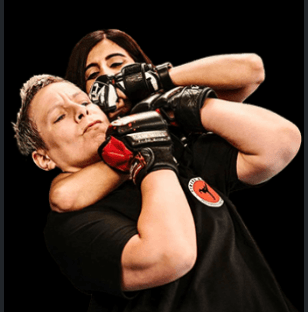
Recently, personal safety took centre stage on Dragons’ Den, with a women-led self-defence organisation appearing in the opening episode of the new series on BBC One.
Founded by West Midlands entrepreneur Gulshen Bano, Strike Back Self Defence focuses on teaching women and girls practical self-defence skills to increase awareness, confidence and personal safety. Her message, that fear should never be the price of simply living your life is powerful, necessary and absolutely right.
This post isn’t a criticism of that work. In fact, raising awareness, confidence and boundary-setting is a vital part of personal safety. But it is an opportunity to talk honestly about something that often gets overlooked when self-defence is discussed: what actually happens to the body and brain during real-world threat, and why some forms of self-defence training can be insufficient, or even unintentionally risky, if taught without context.
The uncomfortable truth about real-world threat
In The Body Keeps the Score, psychiatrist Bessel van der Kolk describes a case that has become well known in trauma and safety training circles:
A woman with a fifth-degree black belt in karate was sexually assaulted and unable to fight back. Despite years of training, her body froze. Her higher brain functions effectively shut down under extreme stress.
This story isn’t used to dismiss martial arts. It’s used to explain how trauma responses work.
When we experience a sudden, overwhelming threat:
- Adrenaline and cortisol flood the body
- Heart rate spikes
- Fine motor skills deteriorate
- Breathing becomes shallow or stops altogether
- The thinking part of the brain (the prefrontal cortex) goes offline
At that point, we are no longer “choosing” actions. The nervous system is driving the response, fight, flight, freeze, or appease. No amount of technical knowledge guarantees access to it in that moment. This is why much self-defence training doesn’t translate under stress.
A lot of self-defence training is:
- Taught in calm, predictable environments
- Technique-heavy and complex
- Based on cooperation rather than surprise
- Practised infrequently
- Disconnected from fear, shock and adrenaline
- Under real threat, this can fall apart quickly.
We regularly see people who:
- Know the “right move” but can’t initiate it
- Forget sequences entirely
- Become physically rigid or compliant
- Feel shame afterwards for “not doing enough”
- That isn’t failure. It’s biology.
Training that doesn’t address breathing, fear, stress regulation and simplicity risks giving people false confidence, which can be dangerous if it encourages risk-taking or reliance on techniques that may not be accessible when they’re needed most.
At best, it’s ineffective.
At worst, it creates expectations the body cannot meet under trauma.
Why we don’t teach physical self-defence at Safer Support
At Safer Support, we’ve made a deliberate choice not to teach physical self-defence techniques as part of our personal safety training.
That’s not because self-defence is useless, there are excellent, trauma-aware, scenario-based programmes out there that work hard to address these realities.
It’s because, in our experience:
- Most people don’t train often enough for techniques to become instinctive
- Techniques are often too complex to survive adrenaline
- People are far more likely to benefit from prevention, awareness and de-escalation
- Safety is usually won before things turn physical
Our focus is on:
- Recognising early warning signs
- Understanding context and risk
- Boundary setting and assertive communication
- Managing breathing and physiological stress
- De-escalation and safe exit strategies
- Reducing the likelihood of ever reaching a physical confrontation
In short: helping people avoid, escape or calm dangerous situations, not “win” fights.
The role self-defence can play
Done well, self-defence training can:
- Increase confidence and body awareness
- Support boundary setting
- Reduce fear through understanding
- Complement broader personal safety skills
But it needs to be:
- Trauma-informed
- Simple and repeatable
- Practised regularly
- Explicit about stress, fear and adrenaline
- Honest about limitations
Without that, technique alone isn’t protection.
Personal safety is about reality, not reassurance
The conversation sparked on Dragons’ Den matters. Women’s safety deserves attention, investment and seriousness. But it also deserves honesty.
Real-world safety isn’t about perfect moves or heroic responses. It’s about understanding how humans actually behave under threat and building skills that still work when fear, stress and adrenaline take over.
That’s why, at Safer Support, we focus on prevention, awareness and de-escalation first. Because the safest fight is the one you never have to be in.
 Safer Support - Personal Safety & Cuckooing Training
Leave a comment